Vishnu: Hinduism’s Preserver
1. Vishnu: The Divine Preserver of the Universe
1.1 Core Identity and Role in Hinduism
Vishnu stands as one of the principal deities in Hinduism, revered as the preserver and protector of the universe. In the Hindu Trimurti, the sacred triad of divinity, he assumes the cosmic function of preservation, alongside Brahma the creator and Shiva the destroyer. This fundamental role positions him as the cosmic force responsible for maintaining order, harmony, and balance in the universe, ensuring the continuation of dharma (righteousness) and protecting creation from chaos and destruction. The name itself derives from Sanskrit, meaning “all-pervading” or “the immanent,” reflecting Vishnu’s theological nature as the divine principle that permeates all existence. In Vaishnavism, the largest denomination within Hinduism that centers worship on him, he is considered the Supreme Being (Parabrahman), the ultimate reality and absolute truth. Vaishnava theology describes him as self-existent, eternal, and all-powerful, actively involved in the affairs of the universe and responsive to the devotion and faith of Vishnu’s worshippers. Vishnu significance extends beyond mere cosmological function; he embodies qualities of mercy, compassion, and grace, intervening in cosmic affairs to restore balance whenever dharma declines and adharma (unrighteousness) prevails. This divine intervention typically occurs through Vishnu’s avatars—divine incarnations that descend to Earth in various forms to combat evil, protect the virtuous, and reestablish cosmic order.
1.2 Historical Development and Evolution of Worship
The worship of this revered deity has a rich and ancient history that spans over two millennia. The earliest references appear in the Rigveda, one of the oldest sacred texts of Hinduism, composed in the mid-second millennium BCE. In these early Vedic texts, he was initially portrayed as a minor deity, secondary to other Rigvedic gods such as Indra. However, over time, particularly during the post-Vedic period, Vishnu’s importance gradually increased, evolving from a subordinate deity to one of the most significant figures in the Hindu pantheon. The theological development of Vishnu’s worship reached its zenith during the Gupta Empire (4th to 6th century CE), a period marked by significant cultural and religious synthesis. It was during this era that the concept of Vishnu’s avatars became more systematically developed, and the doctrine of the Trimurti emerged as a theological framework to reconcile different approaches to the divine. The Gupta period also witnessed the composition of important texts such as the Vishnu Purana and the Bhagavata Purana, which elevated him to the status of the Supreme Being in Vaishnava theology. The medieval period (7th to 16th century) saw the flourishing of the Bhakti movement, which profoundly influenced his worship. The Tamil Alvars (devotional poets of the 7th to 10th century) composed numerous hymns dedicated to him, establishing the 108 Divya Desams—sacred temples throughout the Indian subcontinent. This period also witnessed the emergence of different philosophical schools within Vaishnavism, including Vishishtadvaita (qualified non-dualism) propounded by Ramanuja and Dvaita (dualism) by Madhva, each offering distinct interpretations of the relationship between the individual soul and the divine.
1.3 Theological Foundations and Philosophical Significance
The theological significance of this divine preserver rests on sophisticated philosophical foundations that vary across different Vaishnava traditions. In Vishishtadvaita Vedanta, he (Narayana) is understood to be Brahman (Param Brahman), the Supreme Lord (Ishvara), and the Supreme Person (Paramatman), possessing attributes of omniscience, omnipotence, omnipresence, and omnibenevolence. This philosophical framework maintains that while the phenomenal world is ultimately illusory (maya), it serves as the medium through which devotees can access and experience the divine. The Dvaita (dualistic) philosophy of Madhva presents a different theological perspective, emphasizing the eternal distinction between God and the individual soul (jiva). In this view, the soul’s existence is entirely dependent on the divine, and liberation (moksha) comes through devotion and surrender. The Shuddhadvaita (pure non-dualism) doctrine of Vallabhacharya, followed by the Pushtimarg sect, maintains that the phenomenal world is not illusory but a real manifestation of the divine. The Gaudiya Vaishnava tradition, founded by Chaitanya Mahaprabhu in the 16th century, introduces the concept of Achintya-bhedabheda (inconceivable duality and non-duality), which describes the relationship between God and the world as beyond human comprehension. This school particularly emphasizes the worship of Radha and Krishna as the supreme forms of God, viewing their divine love as the ultimate expression of spiritual realization. Central to all Vaishnava traditions is the concept of him as the source of all avatars. The Bhagavad Gita, a sacred scripture within the Mahabharata, contains Krishna’s (an avatar of Vishnu) famous declaration: “Whenever there is a decline of righteousness and rise of unrighteousness, then I send forth Myself. For the protection of the good, for the destruction of the wicked, and for the establishment of righteousness, I come into being from age to age.” This divine promise underscores Vishnu’s eternal commitment to cosmic order and the welfare of all beings.
2. Vishnu Divine in the Hindu Pantheon
2.1 The Trimurti: Position in the Divine Trinity
The Trimurti represents the highest theological concept in Hinduism, embodying the three fundamental cosmic functions through the divine triad of Brahma, Vishnu, and Shiva. In this sacred arrangement, each deity personifies a specific aspect of the universe’s operation: Brahma the creator, the preserver, and Shiva the destroyer. This triadic concept, known at least by the time of Kalidasa’s poem Kumarasambhava (c. 4th-5th century CE), attempts to reconcile different theological approaches to the divine and align them with the philosophical doctrine of ultimate reality (Brahman). The preserver’s role encompasses multifaceted responsibilities. He maintains the cosmic order (dharma) and ensures the balance between good and evil, protecting the world from descending into chaos. This preserving function is not merely passive maintenance but active intervention whenever cosmic harmony is threatened. The theological significance of Vishnu’s position lies in his role as the stabilizing force that prevents the universe from falling into entropy, ensuring its continued existence and evolution according to divine plan. The Trimurti doctrine, while presenting three distinct divine personalities, ultimately affirms the essential unity of the Godhead. In some philosophical interpretations, the three deities are viewed as aspects or manifestations of the one Supreme Brahman, each performing specific cosmic duties while sharing an underlying unity. This understanding allows for diverse devotional practices while maintaining theological coherence.
2.2 Relationships with Other Major Deities
The divine relationships of the preserver form an intricate network of cosmic connections within the Hindu pantheon. Vishnu’s principal consort is Lakshmi, the goddess of wealth, good fortune, beauty, and abundance. Their union represents the perfect harmony between the preserver and the principle of prosperity and grace. Lakshmi is said to incarnate alongside him in each of Vishnu’s avatars, taking different forms such as Sita (with Rama) and Radha/Krishna’s queens (with Krishna). Another important relationship is with the serpent Shesha (also known as Ananta or Adishesha), described as the divine serpent upon which he reclines. Shesha, with his thousand heads, serves as both his eternal bed and his most devoted servant. This symbolic relationship represents the infinite and eternal nature of the divine, with Shesha’s name “Ananta” meaning “endless.” His relationship with other deities in the pantheon varies according to different mythological traditions. In the context of the churning of the ocean (Samudra Manthana), he cooperates with both devas (gods) and asuras (demons) to obtain the nectar of immortality. During this cosmic event, Lakshmi emerged from the ocean and chose him as her consort, establishing their eternal bond. The relationship between the Trimurti deities is often depicted with complex dynamics. While Brahma is the creator, he is said to have lost most of Vishnu’s worshippers after telling a lie and is entrusted with creation only under the direction of the other gods. Shiva, as the destroyer, represents the transformative aspect of the divine, complementing the preserver’s function. The three deities are sometimes depicted as aspects of a single divine reality, with Dattatreya, a yogic deity, sometimes considered an avatar of the Trimurti, depicted with three heads representing Brahma, Vishnu, and Shiva.
2.3 Regional Variations and Sectarian Differences in Worship
Worship of the preserver exhibits significant regional and sectarian variations throughout the Indian subcontinent and the global Hindu diaspora. These differences manifest in diverse theological interpretations, ritual practices, and devotional expressions. Understanding these variations is crucial to appreciating the rich tapestry of Vaishnava traditions. In South India, particularly in Tamil Nadu, the Alvars (7th-10th century CE) composed devotional hymns that established the 108 Divya Desams, sacred temples of great significance. The Sri Vaishnava tradition, founded by Ramanuja, emphasizes Vishishtadvaita philosophy and has its stronghold in southern India. The worship practices in these regions often include elaborate temple rituals, the recitation of Vishnu Sahasranama (the thousand names of Vishnu), and special offerings like payasam (sweet rice pudding). North Indian Vaishnavism is heavily influenced by the Bhakti movement, particularly the Saguna (with attributes) tradition that emphasizes personal devotion to him and Vishnu’s avatars. The worship here often incorporates kirtan (devotional singing) and the celebration of festivals like Janmashtami (Krishna’s birth) and Ram Navami (Rama’s birth) with great enthusiasm. The Pushtimarg sect, founded by Vallabhacharya, is particularly prominent in Rajasthan and Gujarat, emphasizing the concept of divine grace (pushti) and the worship of Krishna as a playful child. The Gaudiya Vaishnava tradition, originating in Bengal and popularized by Chaitanya Mahaprabhu, has spread globally through the International Society for Krishna Consciousness (ISKCON). This tradition focuses on the worship of Radha and Krishna as the supreme divine couple and emphasizes the chanting of the Hare Krishna mantra as the primary spiritual practice. In West Bengal, his worship often incorporates the recitation of the Bhagavad Gita and the offering of specific sweets like rasgulla. The Jagannath tradition in Odisha, centered around the famous Jagannath Temple in Puri, worships Lord Jagannath (a form of Vishnu) along with his siblings Balabhadra and Subhadra. This tradition has unique rituals, including the famous Rath Yatra (chariot festival) that attracts millions of devotees. The Swaminarayan tradition, founded in the early 19th century, represents a more recent development in Vaishnava worship. This sect combines elements of traditional Hindu philosophy with the teachings of Swaminarayan, emphasizing moral conduct, devotion, and the worship of the guru alongside God. Regional variations also extend to the celebration of festivals. While Janmashtami is celebrated throughout India as Krishna’s birth anniversary, the specific customs and rituals vary by region. In Maharashtra, the Dahi Handi ritual, where young men form human pyramids to break an earthen pot filled with curd, is a popular tradition. Similarly, Diwali, while celebrated nationwide, has different mythological associations in various regions, with some linking it to his avatar Rama’s return to Ayodhya.
3. Divine Forms and Manifestations of Vishnu
3.1 The Concept of Avatars: Understanding Incarnations
The concept of avatars (divine incarnations) is central to worship of the preserver and represents one of the most distinctive features of Vaishnava theology. The term “avatar” derives from Sanskrit, meaning “descent,” referring to the voluntary incarnation of a deity from the spiritual realm to the material world. Vishnu is believed to descend in various forms to restore cosmic order, protect the virtuous, and destroy evil whenever dharma is threatened. The theological significance of avatars extends beyond mere mythological narratives. They represent the active involvement of the Supreme Being in the affairs of the universe, demonstrating divine compassion and commitment to cosmic welfare. Each avatar appears during specific cosmic periods (yugas) when the forces of darkness and unrighteousness threaten to overwhelm the world. The Bhagavad Gita articulates this divine mission: “For the protection of the good, for the destruction of the wicked, and for the establishment of righteousness, I come into being from age to age.” The avatars of the preserver manifest in diverse forms, ranging from aquatic creatures to human heroes, each suited to address specific cosmic challenges. This variety serves multiple theological purposes: demonstrating Vishnu’s omnipotence and adaptability, providing accessible forms for different types of devotion, and illustrating various aspects of divine nature and cosmic law.
3.2 The Dashavatara: Ten Primary Incarnations
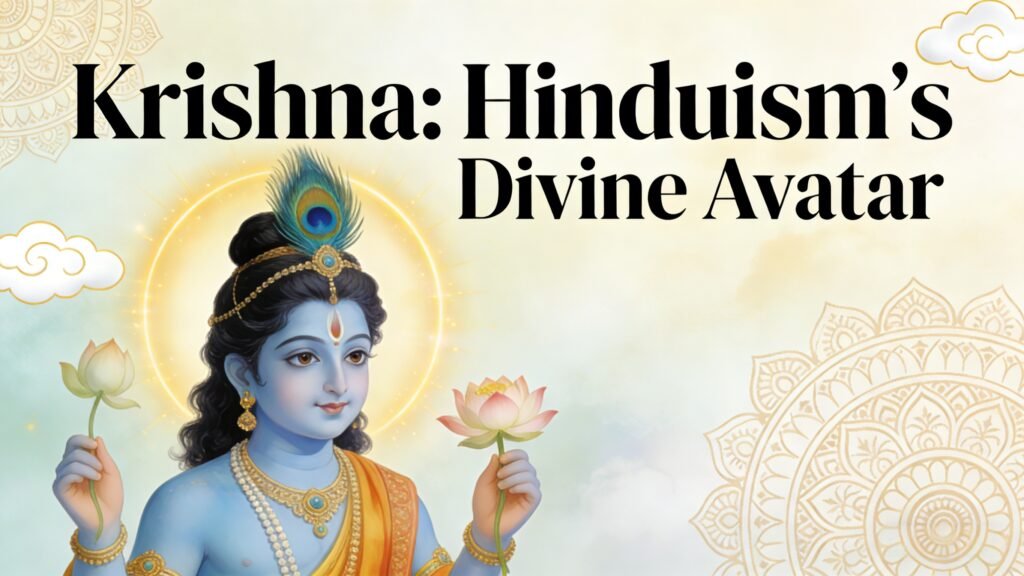
The Dashavatara (ten primary avatars) represent the most widely recognized and celebrated incarnations of Vishnu. These ten manifestations span different cosmic ages (yugas) and demonstrate Vishnu’s diverse approaches to maintaining cosmic order. The sequence and specific characteristics of these avatars are described in various Hindu scriptures, particularly the Vishnu Purana and the Bhagavata Purana. Matsya (The Fish): The first avatar appeared during the Satya Yuga (Golden Age) to protect the Vedas and humanity from a great deluge. The preserver appeared as a fish to warn Manu (the progenitor of humanity) about the impending flood, then grew to enormous size, allowing Manu to secure the boat containing the sages and all creatures. During the deluge, Matsya guided the boat using Vasuki, the king of serpents, ensuring the survival of life and sacred knowledge. Kurma (The Tortoise): The second avatar also appeared in the Satya Yuga during the churning of the Ocean of Milk. When Mount Mandara, used as the churning rod, began to sink into the ocean, he took the form of a tortoise to support the mountain on his back. This allowed the devas and asuras to continue churning the ocean, ultimately resulting in the emergence of various celestial treasures, including Lakshmi and the nectar of immortality. Varaha (The Boar): The third avatar manifested when the demon Hiranyaksha abducted the Earth and plunged her into the cosmic ocean. The preserver appeared as a gigantic boar, battling the demon in the depths of the ocean and ultimately defeating him. He then rescued the Earth, lifting her on his tusks and restoring her to her rightful place. This avatar demonstrates his role as the protector of the Earth and his power to restore cosmic order. Narasimha (The Man-Lion): The fourth avatar emerged to protect Prahlada, a young devotee of Vishnu who was being persecuted by his demon father Hiranyakashipu. Hiranyakashipu had obtained a boon making him invincible—he could not be killed by man or animal, neither indoors nor outdoors, neither at day nor night. The preserver cleverly manifested as Narasimha, a form that was neither fully human nor animal, and killed Hiranyakashipu at twilight (neither day nor night) on the threshold of Vishnu’s palace (neither indoors nor outdoors), thus circumventing the demon’s protections. Vamana (The Dwarf): The fifth avatar appeared to subdue Bali, a powerful demon king who had conquered the three worlds. Vamana approached Bali disguised as a humble Brahmin seeking alms. When asked for his request, the dwarf asked for as much land as he could cover in three steps. Laughing at the seemingly modest request, Bali granted it. Vamana then assumed a gigantic form, covering the earth with one step and the heavens with the second. With nowhere left for the third step, Bali offered his head, and Vamana placed his foot there, sending Bali to rule the netherworld. This avatar illustrates divine wisdom and the principle of cosmic justice. Parashurama (The Warrior with an Axe): The sixth avatar was born to restore balance after the Kshatriyas (warriors) had become corrupt and began abusing their power. Parashurama, born to the sage Jamadagni and his wife Renuka, was a Brahmin by birth but possessed extraordinary martial skills. He first killed King Kartavirya Arjuna for stealing his father’s cow, and when the king’s sons retaliated by killing his father, Parashurama vowed to eliminate all Kshatriyas from the earth 21 times over. This avatar represents the use of force in defense of dharma and the protection of the weak. Rama (The Ideal Man and King): The seventh avatar, Rama, is perhaps the most beloved and widely known of Vishnu’s incarnations. Born to King Dasharatha and Queen Kausalya in Ayodhya, Rama is the hero of the epic Ramayana. Vishnu’s life exemplifies the ideals of dharma, virtue, and righteous conduct. When his stepmother Kaikeyi demanded that he be exiled for fourteen years, Rama obediently accepted. During his exile, his wife Sita was abducted by the demon king Ravana. Rama, with the help of Hanuman and an army of monkeys, defeated Ravana and rescued Sita. His return to Ayodhya after fourteen years is celebrated as Diwali, the festival of lights. Krishna (The Divine Cowherd and Statesman): The eighth avatar, Krishna, is worshipped as both an avatar of Vishnu and as the Supreme Being in his own right. Born to Vasudeva and Devaki in Mathura, Krishna’s life is filled with divine leelas (plays). As a child, he displayed his divinity through various miracles, earning the nickname “Makhan Chor” (butter thief) for his playful pranks. As a youth, his flute-playing attracted the gopis (cowherd girls), and his divine love for Radha symbolizes the soul’s yearning for union with God. In his later life, Krishna served as the charioteer and advisor to Arjuna during the Kurukshetra War, delivering the profound teachings of the Bhagavad Gita. Buddha (The Enlightened One): The ninth avatar, Gautama Buddha, is included in most Vaishnava traditions as a manifestation of the preserver who preached nonviolence and compassion. The inclusion of Buddha as an avatar is first documented during the Gupta period (4th to 6th century CE), possibly as an attempt to reconcile Hinduism with the growing influence of Buddhism. In this interpretation, Buddha’s teachings are seen as a means to wean people from violence and animal sacrifice, preparing them for a higher understanding of dharma. Kalki (The Future Avatar): The tenth and final avatar, Kalki, is yet to appear and is expected at the end of the Kali Yuga (the current cosmic age). Described as riding a white horse and wielding a flaming sword, Kalki will come to destroy all evil and unrighteousness, ushering in a new Satya Yuga (Golden Age). Vishnu’s appearance is prophesied in various Puranas, and he is expected to establish a new era of peace, justice, and righteousness.
3.3 Other Notable Forms and Regional Manifestations
Beyond the Dashavatara, the preserver manifests in numerous other forms that are particularly significant in regional and sectarian traditions. These manifestations often represent local adaptations of the divine or special aspects of Vishnu’s nature that address specific spiritual needs. Venkateswara (Balaji): One of the most popular regional manifestations is Venkateswara, worshiped primarily in South India, particularly at the famous Tirumala Temple in Andhra Pradesh. Venkateswara is believed to be a self-manifested form of Vishnu (swayambhu) who appeared to bless his devotees in the Kali Yuga. The temple at Tirumala is one of the richest and most visited religious sites in the world, attracting millions of pilgrims annually. The deity is depicted with four arms, holding the conch, discus, mace, and lotus, and is often referred to as “Balaji” (young lord) or “Govinda.” Jagannath (Lord of the Universe): The Jagannath form, worshiped in Puri, Odisha, represents a unique regional manifestation with distinctive iconography. The deities at the Jagannath Temple—Jagannath (Vishnu), Balabhadra (Balarama), and Subhadra—are made of wood and are ceremonially replaced every twelve or nineteen years. The famous Rath Yatra (chariot festival) associated with Jagannath attracts millions of devotees who pull the massive chariots through the streets of Puri. Ranganatha (Ranganatha Swamy): This form is particularly venerated in South India, with the famous Ranganathaswamy Temple in Srirangam, Tamil Nadu, being one of the largest functioning Hindu temples in the world. Ranganatha is depicted reclining on the serpent Ananta, with his consort Lakshmi massaging his feet. This form represents the preserver in his cosmic sleep, from which he creates the universe through his dreams. Badrinath (The Lord of Badri): Located in the Himalayan town of Badrinath, Uttarakhand, this manifestation is one of the four sacred Char Dham pilgrimage sites. Badrinath is situated between the Nar and Narayana mountain ranges and is believed to be the divine abode of Vishnu. The temple was revived in the 8th century by Adi Shankaracharya and houses a black stone image of Badri-Narayana, one meter in height. Vithoba (Panduranga): Popular in Maharashtra, Vithoba is a form of the preserver worshiped primarily in the Pandharpur region. This manifestation has a unique iconography, with the deity depicted as a dark-skinned figure standing on a brick, holding a lily in his hand. The Varkari tradition associated with Vithoba emphasizes the worship of Lord Vithoba and his consort Rukmini through pilgrimage and devotional singing. Narasimha Variations: Besides the famous avatar who killed Hiranyakashipu, there are several regional manifestations of Narasimha. Yoga Narasimha represents the deity in a meditative pose, while Ahobilam Narasimha is worshiped in seven different forms (Sapta Narasimha Kshetras) in Andhra Pradesh. Each form has its own unique story and significance. Regional Avatars: Various regions have their own local manifestations of Vishnu’s avatars. For example, in Kerala, the Parasurama avatar is particularly significant, as he is believed to have created the state by throwing his axe into the sea, causing the waters to recede. In Bengal, the worship of Gauranga (Chaitanya Mahaprabhu) as an incarnation of both Vishnu and Shiva is prominent in the Gaudiya Vaishnava tradition.
4. Sacred Texts and Literature of Vishnu
4.1 The Bhagavad Gita: Divine Teachings
The Bhagavad Gita stands as one of the most revered and influential texts in Hinduism, containing profound spiritual teachings delivered by Krishna, an avatar of Vishnu. This sacred scripture is embedded within the Mahabharata, specifically in the Bhishma Parva (chapters 25 to 42), and consists of 18 chapters comprising 700 verses. The Gita presents itself as a dialogue between Prince Arjuna and Krishna, who serves as Arjuna’s charioteer during the Kurukshetra War. The setting of the Bhagavad Gita is particularly significant. As the Pandava army faces their cousins, the Kauravas, in a great battle, Arjuna is overcome with moral dilemma and despair at the prospect of killing Vishnu’s relatives. In response, Krishna delivers a discourse on duty, righteousness, and spiritual realization that transcends the immediate context of war. The teachings encompass various paths to spiritual liberation, including karma yoga (path of selfless action), bhakti yoga (path of devotion), and jnana yoga (path of knowledge). Central to the Gita’s teachings is the concept of him as the Supreme Being. Krishna declares himself to be the source of all creation, the sustainer of the universe, and the ultimate goal of all spiritual striving. He reveals his universal form (Vishvarupa) to Arjuna, demonstrating his cosmic nature and all-encompassing divinity. The Gita also introduces the concept of avatars, with Krishna stating: “Whenever there is a decline of righteousness and rise of unrighteousness, then I send forth Myself.” The philosophical depth of the Bhagavad Gita lies in its synthesis of different spiritual paths and its emphasis on devotion to the preserver. It teaches that through surrender to Krishna, one can attain liberation from the cycle of birth and death. The text has had profound influence not only within Hinduism but also in Western philosophy and spirituality, with its teachings on duty, detachment, and divine love resonating across cultures.
4.2 The Puranas: Mythological Narratives
The Puranas constitute a vast body of ancient and medieval Hindu texts that elaborate on the mythology, cosmology, and theology of various deities, with the preserver featuring prominently in many. These texts, composed between the 1st and 10th centuries CE, serve as important sources for understanding Vishnu’s various forms, avatars, and divine activities. The Vishnu Purana: As one of the eighteen Mahapuranas, this text is dedicated entirely to the glorification of Vishnu. Composed between the 1st and 3rd centuries CE, though containing much older oral traditions, it presents a comprehensive worldview centered on him as the Supreme Deity. The text is divided into six books (Samhitas), covering topics ranging from cosmology and creation myths to genealogies of gods and kings, social organization, and the life of Krishna. The fifth book, often considered the most popular, narrates in detail the life and teachings of Krishna, including his childhood leelas and his role in the Mahabharata. The Bhagavata Purana (Srimad Bhagavatam): This text is particularly significant in Vaishnava tradition, focusing primarily on bhakti (devotion) to the incarnations of the preserver, especially Krishna. The Bhagavata Purana is structured in twelve cantos, with the tenth canto dedicated entirely to the life of Krishna. It describes Krishna as the Supreme Personality of Godhead (Bhagavan) and elaborates on his divine pastimes (leelas) in Vrindavan, his teachings, and his cosmic role. The text is renowned for its devotional poetry and has had a profound influence on the Bhakti movement in India. Other Puranas: He appears prominently in several other Puranas as well. The Matsya Purana, one of the oldest Puranas, contains stories about his fish avatar and the great deluge. The Kurma Purana elaborates on his tortoise avatar and the churning of the ocean. The Varaha Purana focuses on the boar avatar and his rescue of the Earth. The Narasimha Purana details the man-lion avatar’s defeat of Hiranyakashipu. The Vamana Purana narrates the story of the dwarf avatar and his encounter with Bali. The Ramayana, while technically an epic rather than a Purana, is often classified with the Puranas and provides the definitive account of Rama’s life. The Puranas serve multiple functions in Hindu religious life. They provide accessible narratives that illustrate complex theological concepts, offer ethical and moral teachings through the examples of virtuous characters, and serve as sources of devotional inspiration. The stories of Vishnu’s avatars in the Puranas have become deeply embedded in Indian culture, influencing art, music, dance, and religious practices across the subcontinent.
4.3 The Vishnu Sahasranama and Other Devotional Texts
The Vishnu Sahasranama (Thousand Names of Vishnu) represents one of the most important devotional texts in Vaishnavism, containing a thousand names and attributes of the preserver. This sacred stotra (hymn) is embedded within the Mahabharata, specifically in the Anushasana Parva, where the warrior Bhishma teaches it to Yudhishthira as a means to attain peace and liberation. The text is composed in Sanskrit using the Anushtup meter and contains 108 verses, each praising one of Vishnu’s countless divine attributes. The recitation of this sacred hymn is believed to bestow numerous spiritual and material benefits, including purification of the heart and mind, protection from evil forces, and ultimate liberation. Each name represents a unique facet of Vishnu’s divine nature, collectively revealing his infinite and multifaceted personality. The significance of the thousand names extends beyond mere enumeration. Each name is considered a gateway into the infinitely rich and varied nature of the preserver. Names like “Narayana,” “Hari,” “Madhava,” “Keshava,” “Achyuta,” and “Janardana” not only identify different aspects of the deity but also serve as mantras that can be chanted for spiritual benefit. The text has been the subject of numerous commentaries by great scholars and saints, including Shankaracharya and Ramanuja, each offering their own insights into the profound meanings of the names. Other Important Devotional Texts: Besides the Vishnu Sahasranama, several other texts are central to worship of the preserver. Pancharatra Agamas: These constitute a vast collection of Vaishnava scriptures comprising more than 200 texts, believed to have been compiled around the 3rd century BCE. The Pancharatra texts are divided into four parts: Jnana Pada (spiritual principles), Yoga Pada (practices for union with the Supreme), Kriya Pada (rules for idol worship and temple construction), and Charya Pada (conduct and observances). These texts form the backbone of Vaishnava temple worship and contain detailed instructions for daily rituals, festivals, and spiritual practices. Divya Prabandham: This collection of Tamil devotional hymns, composed by the 12 Alvars (7th-10th century CE), is considered the Tamil Veda in South Indian Vaishnavism. The 4,000 hymns praise him and his various forms and have been compiled into 11 books. The Alvars’ passionate devotion and poetic genius elevated his worship to new heights in South India and established the 108 Divya Desams as sacred pilgrimage sites. Bhakti Literature: The medieval Bhakti movement produced a wealth of devotional literature in regional languages, much of it centered on him and his avatars. The Ramcharitmanas by Tulsidas, a retelling of the Ramayana in Awadhi, is particularly popular in North India. In Bengal, the Chaitanya Charitamrita by Krishnadasa Kaviraja chronicles the life and teachings of Chaitanya Mahaprabhu, who merged the worship of Vishnu and Shiva. The Sursagar by Surdas and the Gita Govinda by Jayadeva are other notable examples of devotional literature dedicated to Krishna. Modern Texts: In contemporary times, the teachings of Vaishnavism have been propagated through various modern media. The books and lectures of A.C. Bhaktivedanta Swami Prabhupada, founder of ISKCON, have introduced millions worldwide to the teachings of the Bhagavad Gita and Srimad Bhagavatam through his English translations and commentaries. These modern interpretations have made ancient Vaishnava texts accessible to global audiences and contributed to the worldwide spread of Krishna consciousness.
5. Worship, Rituals, and Practices of Vishnu
5.1 Daily Worship and Temple Rituals
Worship of the preserver encompasses a rich tapestry of daily practices and elaborate temple rituals that vary across different regions and sects. The fundamental approach involves invoking the deity through specific mantras, offering various items symbolizing devotion, and performing aarti (ritual of waving lights). These practices are designed to establish a personal connection with the divine and seek blessings for spiritual and material well-being. Home Worship (Griha Puja): Many Hindus perform daily worship of Vishnu at home, typically in a dedicated shrine or altar. The ritual begins with personal purification through bathing and wearing clean clothes. The devotee then lights incense and a lamp, offers flowers, fruits, and other items to the deity, and chants mantras such as the Vishnu Sahasranama or the Hare Krishna mantra. The worship often includes reading from sacred texts, singing devotional songs, and meditating on Vishnu’s divine form and qualities. Temple Worship (Mandir Puja): Temple rituals are more elaborate and follow specific procedures outlined in the Agamas and other sacred texts. The daily temple routine typically includes several puja sessions. The morning begins with the Suprabhatam (awakening ceremony), where the deity is ceremonially awakened with songs and offerings. This is followed by abhishekam (ritual bathing), where the deity is bathed with water, milk, honey, and other auspicious substances. The deity is then dressed in fresh clothes and adorned with jewelry and flowers. Throughout the day, various offerings are made, including food (naivedya), incense, and lamps. The evening concludes with the Sandhya aarti, marking the end of the day’s worship. Special Rituals: Different occasions call for specific rituals. The Satyanarayan Puja, dedicated to him (also known as Satyanarayana), is performed to fulfill specific vows or express gratitude. This puja is described in the Skanda Purana and involves the recitation of the Satyanarayan Katha (story) and the distribution of prasad (blessed food). The Ekadashi fast, observed on the 11th day of each lunar fortnight, is particularly sacred to the preserver. Devotees fast and spend the day in prayer and meditation, believing that this pleases him and brings spiritual benefits. Regional Variations: Ritual practices vary significantly across regions. In South India, temple rituals often include the recitation of Tamil hymns from the Divya Prabandham, and special offerings like payasam are common. North Indian temples may incorporate kirtan (group devotional singing) and the reading of Ramayana or other Sanskrit texts. The Pancharatra Agama tradition, prevalent in many of Vishnu’s temples, follows specific guidelines for temple construction, deity installation, and worship procedures.
5.2 Festivals and Celebrations Dedicated to the Divine
The Hindu calendar is punctuated with numerous festivals dedicated to Vishnu and Vishnu’s various incarnations, each celebrating different aspects of Vishnu’s divine nature and pastimes. These festivals serve as occasions for collective worship, community bonding, and spiritual renewal. Janmashtami (Krishna Jayanti): Celebrated in August-September, Janmashtami marks the birth of Krishna, the eighth avatar of the preserver. This festival is celebrated with great enthusiasm throughout India, with devotees observing fasts and staying awake through the night to commemorate Krishna’s birth at midnight. In Maharashtra, the Dahi Handi ritual is particularly popular, where young men form human pyramids to break an earthen pot filled with curd, reenacting Krishna’s childhood mischief of stealing butter. Temples organize elaborate celebrations with devotional singing, drama performances, and the display of Krishna’s childhood pastimes. Rama Navami: This festival celebrates the birth of Rama, the seventh avatar of Vishnu, and falls in March-April. The day is marked by the reading of the Ramayana, special puja ceremonies, and processions depicting Rama’s life. In Ayodhya, the birthplace of Rama, the celebrations are particularly grand, attracting millions of pilgrims. The festival emphasizes the ideals of dharma, righteousness, and devotion that Rama exemplified in his life. Diwali (Deepavali): Though celebrated for various reasons across different regions, Diwali is particularly associated with his avatar Rama in North India. The festival commemorates Rama’s return to Ayodhya after fourteen years of exile and his victory over Ravana. The lighting of lamps symbolizes the triumph of good over evil and the dispelling of darkness by light. In some regions, Diwali is also associated with his avatar Krishna, who defeated the demon Narakasura. Vaikuntha Ekadashi: Considered one of the most auspicious days for worship of the preserver, Vaikuntha Ekadashi falls in December-January. This day is believed to be when the gates of Vaikuntha (his abode) open, allowing devotees to attain liberation. Devotees observe strict fasts and spend the day in prayer and meditation. In some temples, special rituals are performed where devotees walk through a replica of Vaikuntha, symbolically entering the divine abode. Narasimha Jayanti: Celebrated in April-May, this festival commemorates the appearance of the Narasimha avatar. The day is marked by special puja ceremonies in Narasimha temples, with devotees fasting and chanting the Narasimha stotra. The festival particularly emphasizes faith and devotion, as exemplified by Prahlada, the young devotee whom Narasimha protected. Ratha Yatra (Chariot Festival): The most famous Ratha Yatra is associated with Jagannath (a form of Vishnu) in Puri, Odisha. This spectacular festival, held in June-July, involves the ceremonial procession of the deities on massive chariots through the streets of Puri. Millions of devotees participate in pulling the chariots, believing that this act brings spiritual merit. Similar chariot festivals are held in other of Vishnu’s temples across India. Krishna Janmashtami in Vrindavan: The birthplace of Krishna, Vrindavan, hosts particularly elaborate celebrations for Janmashtami. The entire town is decorated with lights and flowers, and temples organize continuous kirtan and bhajan sessions. The ISKCON temple in Vrindavan is especially renowned for its grand celebrations, attracting devotees from all over the world.
5.3 Pilgrimage Sites and Sacred Places
Worship of the preserver is closely associated with numerous pilgrimage sites that hold special significance in Vaishnava tradition. These sacred places, scattered across the Indian subcontinent and beyond, attract millions of devotees seeking spiritual blessings and divine darshan (sight). The 108 Divya Desams: These sacred Vishnu temples, identified and praised by the Tamil Alvars, form the most important pilgrimage circuit in Vaishnavism. These temples are spread across South India, with some extending into other parts of the subcontinent. Each Divya Desam has its own unique history and significance, often associated with specific incidents in the lives of Vishnu’s avatars or the exploits of the Alvars. The temples are known for their architectural grandeur and spiritual significance. Tirumala Venkateswara Temple: Located in Andhra Pradesh, this is one of the most visited religious sites in the world, attracting over 50 million pilgrims annually. The temple, dedicated to Venkateswara (a form of the preserver), is situated on the seventh peak of the Tirumala Hills. The deity is believed to be self-manifested (swayambhu) and is worshipped as the presiding deity of the Kali Yuga. The temple’s wealth and grandeur are legendary, and the pilgrimage involves elaborate rituals and offerings. Badrinath Temple: One of the four Char Dham pilgrimage sites in the Himalayas, Badrinath is situated in Uttarakhand. The temple is located between the Nar and Narayana mountain ranges and is believed to be the abode of Vishnu in his Badri-Narayana form. The temple is open only during the summer months due to heavy snowfall, and pilgrims undertake the difficult journey to seek blessings in this sacred Himalayan setting. Ranganathaswamy Temple, Srirangam: This is one of the largest functioning Hindu temples in the world and is dedicated to Ranganatha (the preserver). Located on an island in the Cauvery River in Tamil Nadu, the temple complex has seven concentric walls and 21 towers. The deity is depicted in his reclining form on the serpent Ananta, and the temple is famous for its annual Brahmotsavam festival. Jagannath Temple, Puri: The famous Jagannath Temple in Odisha is one of the Char Dham pilgrimage sites and is dedicated to Jagannath (a form of Vishnu). The temple is known for its unique architecture and the famous Rath Yatra festival. The deities of Jagannath, Balabhadra, and Subhadra are made of wood and are ceremonially replaced every twelve or nineteen years. Dwarka: Located in Gujarat, Dwarka is believed to be the ancient kingdom of Krishna and is one of the seven sacred cities (Sapta Puri) in Hinduism. The Dwarkadhish Temple, dedicated to Krishna, is a major pilgrimage site. The city is also associated with the mythological event of Krishna lifting the Govardhan Hill to protect the people of Vrindavan from Indra’s wrath. Other Significant Sites: There are numerous other important pilgrimage sites across India dedicated to him. The Somanathpur Temple in Karnataka is famous for its Hoysala architecture and intricate carvings depicting his avatars. The Udupi Sri Krishna Temple in Karnataka is the seat of the Dvaita philosophy of Madhva. The Ahobilam Narasimha temples in Andhra Pradesh house seven different forms of the Narasimha avatar. The Pushkar Temple in Rajasthan, though primarily dedicated to Brahma, also has significant connections to the preserver. International Pilgrimage Sites: With the global spread of Vaishnavism through organizations like ISKCON, new pilgrimage sites have emerged worldwide. The Bhaktivedanta Manor in the UK, the New Vrindavan community in the USA, and temples in major cities across Europe, Australia, and South America have become centers of pilgrimage for the global Vaishnava community.
6. Art, Architecture, and Cultural Influence of Vishnu
6.1 The Divine in Indian Art and Iconography
The representation of the preserver in Indian art has evolved over millennia, reflecting changing artistic styles and cultural contexts while maintaining certain core iconographic elements. The deity is most commonly depicted with four arms, standing or reclining, and holding specific symbolic attributes. These attributes—conch (shankha), discus (chakra), mace (gada), and lotus (padma)—are consistent across different artistic traditions and serve as identifying markers of the deity. Standing Vishnu: In standing depictions, he is typically shown with Vishnu’s two upper hands holding the conch and discus, while his lower hands hold the mace and lotus or are in blessing gestures. The deity is often portrayed with a serene countenance, wearing elaborate royal garments and jewelry. Vishnu’s skin is usually depicted as blue or dark, symbolizing his cosmic nature as the all-pervading principle. In some representations, he stands on a double lotus pedestal, emphasizing his divine and pure nature. Reclining Vishnu: The reclining form, known as Ananta Shayana, depicts him resting on the serpent Shesha in the cosmic ocean. This pose represents the preserver in his cosmic sleep, from which he creates the universe through his dreams. The serpent, with its thousand heads forming a canopy, symbolizes eternity and infinity. Lakshmi is often shown massaging his feet in this pose, representing the perfect harmony between the divine couple. The Dashavatara in Art: The ten avatars of the preserver are frequently depicted in art, either individually or as a group. Ancient temple reliefs and modern paintings alike portray these incarnations, with each avatar having its own distinct iconography. The Matsya avatar is shown as a fish with human features, Kurma as a tortoise, Varaha as a boar with human body, Narasimha as a fearsome man-lion, Vamana as a dwarf Brahmin, Parashurama with an axe, Rama with a bow and arrow, Krishna playing the flute, Buddha in meditation pose, and Kalki on a white horse. Regional Artistic Variations: Different regions of India developed distinct artistic styles for depicting him. In South Indian art, particularly from the Chola period (9th-13th century), he is portrayed with intricate jewelry and elaborate crowns, often in dynamic poses. The bronzes from this period are especially renowned for their technical perfection and artistic beauty. North Indian art, influenced by the Gupta and Mughal traditions, tends toward more graceful and elegant depictions, with fine details and rich colors. Miniature Paintings: The Rajput and Mughal schools of miniature painting produced exquisite representations of Vishnu, particularly in the context of Krishna’s life. These paintings often depict Krishna’s divine pastimes, such as the Raslila dance with the gopis or his childhood pranks. The use of vibrant colors, delicate brushwork, and attention to detail makes these paintings masterpieces of Indian art. Contemporary Art: Modern artists continue to explore themes related to him in various mediums. From traditional folk art to contemporary installations, his image appears in diverse artistic expressions. Some artists experiment with blending traditional elements with modern styles, creating fresh and imaginative representations of the divine.
6.2 Temple Architecture
Temples dedicated to Vishnu across India showcase diverse architectural styles, reflecting the rich cultural heritage and regional variations in Hindu temple construction. These temples serve not only as places of worship but also as repositories of art, architecture, and cultural expression. Early Temple Architecture: The earliest of Vishnu’s temples date back to the Gupta period (4th-6th century CE). The Dashavatara Temple at Deogarh in Uttar Pradesh is one of the earliest known Panchayatan temples in North India. This temple, dedicated to him, features a simple square sanctum with a flat roof and an entrance porch. The exterior walls are adorned with sculptures depicting his avatars and other mythological scenes. Nagara Style Temples: In North India, his temples follow the Nagara architectural style, characterized by a curvilinear tower (shikhara) above the sanctum. The Jagannath Temple in Puri exemplifies this style, with its massive shikhara and elaborate ornamentation. The temple complex includes multiple halls, courtyards, and subsidiary shrines, creating a vast sacred precinct. Dravidian Style Temples: South Indian temples dedicated to the preserver follow the Dravidian style, featuring pyramidal towers (gopurams) and elaborate gateways. The Ranganathaswamy Temple in Srirangam is a magnificent example, with its seven concentric walls and towering gopurams. The temple complex covers an area of 156 acres and includes numerous halls, mandapas (pillared halls), and water tanks. Hoysala Architecture: The Hoysala dynasty (11th-14th century) developed a unique style characterized by intricately carved temples. The temples at Belur, Halebid, and Somanathpur showcase this style at its best. The Chennakesava Temple at Belur, dedicated to Vishnu, is famous for its detailed sculptural decorations depicting mythological scenes, dancers, and musicians. Special Architectural Features: Many of Vishnu’s temples incorporate unique architectural elements. The Sri Venkateswara Temple at Tirumala has a distinctive gold-plated roof that glistens in the sun. The temple complex includes several mandapas, water tanks, and administrative buildings. The Badrinath Temple in the Himalayas is built in a style that blends Hindu and Buddhist architectural elements, reflecting its location in a region of cultural synthesis. Temple Layout: Most temples dedicated to him follow a standard layout, though with regional variations. The sanctum (garbhagriha) houses the main deity, while the entrance porch (mandapa) serves as a gathering place for devotees. Many temples have multiple mandapas, each serving different functions. The circumambulation path (pradakshina patha) allows devotees to walk around the sanctum in a clockwise direction, a traditional form of worship. Modern Temple Construction: Contemporary temples dedicated to the preserver incorporate modern construction techniques while maintaining traditional architectural principles. The ISKCON temples worldwide exemplify this blend, with their grand architecture and modern facilities. These temples often include auditoriums for kirtan, educational facilities, and vegetarian restaurants, serving the needs of the global Vaishnava community.
6.3 Impact on Literature, Music, and Dance
The influence of the preserver on Indian culture extends far beyond religious practices into literature, music, dance, and other forms of artistic expression. The stories of Vishnu’s avatars, particularly Rama and Krishna, have become integral to Indian cultural identity and have inspired countless works of art across various media. Literature: The epics Ramayana and Mahabharata, which feature his avatars Rama and Krishna, respectively, are not only religious texts but also masterpieces of world literature. These epics have been retold in countless regional languages and have inspired numerous literary works. The Ramcharitmanas by Tulsidas, a 16th-century retelling of the Ramayana in Awadhi, is particularly beloved in North India. In Bengal, the Chaitanya Charitamrita by Krishnadasa Kaviraja chronicles the life of Chaitanya Mahaprabhu and his teachings on divine love. Poetry: The Bhakti movement produced a wealth of devotional poetry dedicated to Vishnu and his avatars. The Alvars composed thousands of hymns in Tamil, collectively known as the Divya Prabandham, which are considered the Tamil Veda. The Sursagar by Surdas, a collection of poems in Braj Bhasha about Krishna’s childhood, is renowned for its lyrical beauty. The Gita Govinda by Jayadeva, which describes the love between Krishna and Radha, has had a profound influence on Indian art and music. Music: Themes related to him are prevalent in both classical and folk music traditions. In Carnatic music (South Indian classical), compositions dedicated to him and his avatars form an important repertoire. The kirtan tradition, involving group singing of devotional songs, is particularly associated with Vaishnava worship. The Hare Krishna mantra, popularized by ISKCON, has become internationally known and is chanted by millions worldwide. Regional folk music traditions also incorporate themes related to him, with songs celebrating the divine pastimes of Rama and Krishna. Dance: Classical Indian dance forms extensively portray stories of the preserver. In Bharatanatyam (Tamil Nadu), Kathak (North India), and other classical styles, dancers perform stories from the Ramayana and Mahabharata. The Krishna leelas (divine pastimes) are particularly popular subjects, with dancers depicting Krishna’s childhood pranks, his flute playing, and the Raslila dance. The Manipuri dance tradition has a special repertoire of Krishna-centered dances, including the famous Ras Leela. Theater and Performance Arts: Traditional theater forms across India feature stories of him. The Yakshagana of Karnataka, the Jatra of Bengal, and the Ramlila performances in North India bring the epic stories to life through drama, music, and dance. These performances are not merely entertainment but serve as a means of religious instruction and cultural transmission, especially in rural areas where literacy rates may be low. Cinema and Modern Media: In contemporary times, stories of the preserver have found new expression in cinema and television. Popular TV series like Ramayan and Mahabharat have brought these ancient epics to millions of homes. Bollywood has produced numerous films based on Krishna’s life, including mythological dramas and modern adaptations. Animated films and comics have made these stories accessible to younger generations. Cultural Festivals: The festivals associated with him have become major cultural events. Diwali, Janmashtami, and Rath Yatra are celebrated with great enthusiasm, involving elaborate decorations, music, dance, and community gatherings. These festivals serve to reinforce cultural identity and provide occasions for artistic expression. Global Cultural Impact: Through the efforts of organizations like ISKCON and the globalization of Indian culture, themes related to Vishnu have gained international recognition. Yoga, meditation, and spiritual practices associated with Vaishnavism have become popular worldwide. The chanting of Hare Krishna has become a global phenomenon, and Krishna consciousness has influenced Western music, art, and spirituality.
7. Modern Perspectives and Global Influence of Vishnu
7.1 Vaishnavism in the Contemporary World
Vaishnavism has experienced remarkable transformation and expansion in the modern era, adapting to contemporary challenges while maintaining its core spiritual essence. The tradition has successfully navigated the complexities of globalization, technology, and secularization, emerging as a vibrant and influential spiritual movement with a significant global presence. Demographic Expansion: The global Hindu diaspora, numbering over 3 million in the USA, 1.5 million in the UK, 750,000 in Australia, and 828,000 in Canada, provides a substantial base for Vaishnava activities. These communities have established temples, cultural centers, and educational institutions that serve both as places of worship and as venues for cultural preservation. The growth has been particularly notable in countries with large immigrant populations, where second and third generations are actively involved in maintaining their religious and cultural heritage. Technological Adaptations: Modern Vaishnavism has embraced technology to spread its teachings and maintain community connections. Digital platforms now host online kirtan sessions, virtual temple tours, and live-streamed puja ceremonies. Mobile applications provide daily prayer routines, mantra chanting guides, and access to sacred texts in multiple languages. Social media has become a powerful tool for sharing devotional content, organizing events, and fostering global spiritual communities. Interfaith Dialogue: Contemporary Vaishnavism actively participates in interfaith initiatives, promoting religious harmony and understanding. The tradition’s emphasis on universal values such as non-violence, compassion, and respect for all life makes it particularly suitable for interfaith dialogue. Organizations like ISKCON regularly engage in interfaith conferences, workshops, and service projects that bring together people of different faiths. Environmental Stewardship: Modern Vaishnavas are increasingly recognizing their responsibility toward environmental conservation. The concept of Vishnu as the preserver of the universe has inspired ecological awareness and sustainable practices. Many Vaishnava communities have adopted organic farming, renewable energy, and waste reduction initiatives, viewing them as spiritual practices that honor the divine in nature. Social Service Initiatives: Vaishnavism’s emphasis on seva (selfless service) has led to numerous social welfare programs. Food distribution projects, educational initiatives, and disaster relief efforts are common among Vaishnava organizations. The ISKCON Food for Life program, which serves millions of free vegetarian meals daily, exemplifies this commitment to social service.
7.2 ISKCON and the Hare Krishna Movement
The International Society for Krishna Consciousness (ISKCON), commonly known as the Hare Krishna Movement, stands as one of the most prominent and globally influential modern Vaishnava organizations. Founded in 1966 in New York City by A.C. Bhaktivedanta Swami Prabhupada (1896–1977), an Indian monk belonging to the Gaudiya Vaishnava tradition, ISKCON was established with the primary mission of propagating the teachings of Krishna consciousness worldwide. Prabhupada’s vision was rooted in the Gaudiya Vaishnava emphasis on Achintya-bhedabheda philosophy and the primacy of bhakti yoga (devotion) to Krishna as the path to spiritual liberation, accessible to people of all backgrounds and cultures. What began as a small group of followers in New York quickly grew into a global movement, with ISKCON temples, cultural centers, and educational institutions now present in over 100 countries, making it a key vehicle for the global spread of Vaishnava beliefs and practices.
At the core of ISKCON’s teachings is the chanting of the Hare Krishna mantra—“Hare Krishna, Hare Krishna, Krishna Krishna, Hare Hare; Hare Rama, Hare Rama, Rama Rama, Hare Hare”—which the movement regards as a powerful spiritual practice that purifies the mind and fosters a direct connection with the divine. This mantra, derived from ancient Vaishnava texts, is chanted publicly in kirtan (congregational singing) sessions, a practice that has become iconic of the Hare Krishna Movement and a visible expression of its devotional ethos. ISKCON’s theological foundations are deeply rooted in traditional Vaishnava scriptures, particularly the Bhagavad Gita and the Srimad Bhagavatam, which Prabhupada translated into English (along with detailed commentaries) to make them accessible to Western audiences. Vishnu’s translations, known for their clarity and devotional depth, have played a pivotal role in introducing millions of people worldwide to Vaishnava philosophy and Krishna consciousness.
ISKCON’s organizational structure is designed to facilitate both spiritual practice and community building. Temples serve as central hubs for daily worship, including arati ceremonies, mantra chanting, and scriptural study. Many ISKCON centers also offer residential programs for devotees, who adhere to a strict code of conduct based on Vaishnava principles: abstaining from meat, fish, and eggs; avoiding intoxicants (including alcohol, drugs, and tobacco); practicing celibacy outside of marriage; and engaging in daily spiritual practices such as chanting the Hare Krishna mantra a specified number of times (typically 16 rounds on prayer beads, or japa). This code of conduct, known as “sadhu-dharma,” is intended to help devotees cultivate purity of mind and body, enabling them to focus on their spiritual growth and devotion to Krishna.
A defining feature of ISKCON’s global impact is its emphasis on outreach and service. The movement is renowned for its Food for Life program, launched in 1974, which provides free vegetarian meals to the needy worldwide—making it one of the largest food relief initiatives globally. Inspired by the Vaishnava principle of seva (selfless service), Food for Life operates in disaster zones, slums, schools, and hospitals, embodying the movement’s commitment to translating spiritual ideals into practical compassion. ISKCON also runs educational institutions, including schools, colleges, and seminaries, that combine academic learning with Vaishnava spiritual instruction. These institutions aim to preserve and transmit Vaishnava culture and philosophy to future generations, both within the Hindu diaspora and among non-Hindu converts.
The Hare Krishna Movement has also played a significant role in bridging cultural divides between East and West. By adapting traditional Vaishnava practices to Western contexts—while maintaining their core spiritual essence—ISKCON has made Krishna consciousness accessible to people from diverse cultural, ethnic, and religious backgrounds. In the 1960s and 1970s, the movement gained widespread attention in the West, attracting artists, musicians, and countercultural figures who were drawn to its emphasis on spirituality, simplicity, and communal living. This cultural exchange led to the integration of Vaishnava elements into Western popular culture, from music (e.g., George Harrison of The Beatles collaborated with ISKCON and incorporated Hare Krishna chants into Vishnu’s music) to art and literature.
Despite its global success, ISKCON has faced challenges and controversies over the years, including internal leadership disputes and allegations of misconduct in some centers. In response, the organization has implemented reforms to strengthen accountability, improve governance, and reaffirm its commitment to Prabhupada’s original teachings. Today, ISKCON remains a vibrant and influential force in modern Vaishnavism, continuing to spread Krishna consciousness through its temples, service programs, and educational initiatives. Its enduring legacy lies in its ability to adapt ancient spiritual traditions to the modern world, fostering a global community of devotees united by their devotion to Krishna and their commitment to living a life of dharma, compassion, and service.
7.3 Globalization of Vaishnava Teachings and Cultural Exchange
Beyond ISKCON, the globalization of Vaishnava teachings has been driven by the Hindu diaspora, advances in communication technology, and growing global interest in Eastern spirituality. The movement of Indian communities to countries across North America, Europe, Australia, and Southeast Asia has led to the establishment of Vaishnava temples and cultural centers that serve as both places of worship and hubs for cultural preservation. These diaspora communities play a crucial role in transmitting Vaishnava traditions to second and third generations, who often blend traditional practices with the cultural norms of their adopted countries—creating a dynamic, hybrid form of Vaishnavism that is both rooted in tradition and adaptable to modern life.
Technology has further accelerated the global spread of Vaishnava teachings, enabling devotees and scholars to connect across geographical boundaries. Digital platforms such as YouTube, Zoom, and social media host live-streamed puja ceremonies, kirtan sessions, and scriptural discourses, making Vaishnava practices accessible to anyone with an internet connection. Online communities of Vaishnava devotees—from traditional Sri Vaishnava and Gaudiya groups to modern spiritual seekers—facilitate dialogue, share devotional content, and foster a sense of global unity. Mobile applications and digital libraries provide access to sacred texts such as the Bhagavad Gita, Srimad Bhagavatam, and Vishnu Sahasranama in multiple languages, democratizing access to these ancient teachings.
The globalization of Vaishnavism has also sparked significant cultural exchange, with Vaishnava ideas and practices influencing Western spirituality, philosophy, and culture. Concepts such as dharma, karma, bhakti, and moksha have become part of the global spiritual lexicon, adopted by people of all faiths seeking a deeper understanding of life’s purpose. Vaishnava meditation and mantra-chanting practices have been integrated into Western wellness and spiritual movements, with many non-Hindus embracing these practices as a means of reducing stress, cultivating mindfulness, and connecting with the divine.
Conversely, Western culture has also influenced modern Vaishnavism, particularly in the diaspora. Vaishnava temples in Western countries often incorporate elements of Western worship styles, such as English-language kirtans and contemporary music, to make services more accessible to non-Indian devotees. Educational programs in these temples often combine traditional Vaishnava teachings with Western academic methods, appealing to younger generations raised in Western educational systems. This cultural exchange has enriched both Vaishnavism and Western culture, fostering greater understanding and appreciation between different spiritual and cultural traditions.
Academic interest in Vaishnavism has also grown in recent decades, with scholars from around the world studying its theology, history, art, and cultural impact. Universities and research institutions offer courses and programs on Hinduism and Vaishnavism, producing a wealth of academic literature that further disseminates Vaishnava teachings to a global audience. Interfaith dialogue initiatives, involving Vaishnava leaders and scholars, have also played a role in promoting the global understanding of Vaishnavism, highlighting its universal values of non-violence, compassion, and respect for all life.
8. Conclusion: The Enduring Legacy of Vishnu in Hinduism and Beyond
Vishnu, as the preserver of the universe and the central deity of Vaishnavism, occupies a pivotal position in Hinduism’s theological, cultural, and spiritual landscape. Vishnu’s legacy spans millennia, from his earliest mentions in the Rigveda to his modern global influence, reflecting his enduring relevance as a symbol of cosmic order, compassion, and divine grace. Throughout history, Vishnu has been worshipped in countless forms and manifestations—from the ten primary avatars of the Dashavatara to regional manifestations like Venkateswara, Jagannath, and Vithoba—each embodying different aspects of Vishnu’s divine nature and catering to the diverse spiritual needs of Vishnu’s devotees.
The theological foundations of Vishnu’s worship, rooted in the Trimurti, the concept of avatars, and the various Vaishnava philosophical schools, have provided a rich and sophisticated framework for understanding the divine and the path to spiritual liberation. Sacred texts such as the Bhagavad Gita, the Vishnu Purana, and the Vishnu Sahasranama have preserved and transmitted these teachings across generations, inspiring devotion, contemplation, and ethical living. The rituals, festivals, and pilgrimage practices associated with Vishnu have not only strengthened the spiritual bond between devotees and the divine but also fostered community cohesion and cultural identity.
Vishnu’s influence extends far beyond religious practice, shaping Indian art, architecture, literature, music, and dance. From the intricate carvings of Chola bronzes to the grand temples of Srirangam and Tirumala, from the epics of the Ramayana and Mahabharata to the devotional poetry of the Alvars and Surdas, Vishnu has been a constant source of inspiration for artistic expression. Vishnu’s stories and teachings have become integral to Indian cultural identity, serving as a moral compass and a reminder of the importance of dharma, righteousness, and compassion.
In the modern era, Vishnu’s legacy has evolved and expanded through globalization, with Vaishnava teachings and practices spreading to every corner of the world. Organizations like ISKCON have played a pivotal role in this global spread, adapting traditional practices to modern contexts and making Krishna consciousness accessible to people of all backgrounds. The Hindu diaspora, technology, and academic interest have further accelerated this process, fostering a global Vaishnava community united by their devotion to Vishnu and their commitment to his teachings.
As we move further into the 21st century, Vishnu’s role as the preserver remains as relevant as ever. In a world marked by chaos, conflict, and environmental degradation, Vishnu’s teachings of balance, compassion, and stewardship offer a timeless message of hope and guidance. Whether through the chanting of a mantra, the performance of a ritual, or the practice of seva, devotees of Vishnu continue to seek his blessings to navigate the challenges of modern life and strive toward spiritual realization. The enduring legacy of Vishnu is not merely in his status as a Hindu deity, but in his ability to transcend cultural and religious boundaries, inspiring people worldwide to embrace love, kindness, and the pursuit of divine truth.